Cell Chapter Worksheet with Answers — Class 9 Science
Comprehensive practice worksheet for Class 9 Science Chapter 2: Cell — The Building Block of Life. Includes Fill in the Blanks, True or False, Match the Following, Diagram Labeling (plant cell, animal cell, mitosis stages), Assertion-Reason, HOTS, and activity-based questions — all with a complete answer key. Ideal for CBSE exam revision and classroom practice. Aligned with NCERT syllabus 2026–27.
Fill in Blanks · True/False · Match
Diagram Labeling · HOTS · Assertion-Reason
Complete Answer Key Included
Complete Practice Worksheet | Fill in Blanks | True/False | Match the Following | Diagrams | HOTS | Reading Time: 25 minutes
Practice and reinforce your understanding of the Cell chapter
with this comprehensive worksheet. Complete all sections and check your answers at the end. This worksheet covers all important
topics from NCERT Class 9 Science Chapter 2.
📋 Instructions
Attempt all questions in your notebook
For diagram labeling, draw the diagrams and label all parts
Check your answers only after completing all sections
Review the concept pages for topics you find difficult
Time yourself: Try to complete in 45-60 minutes
Section A: Fill in the Blanks
Complete each sentence with the appropriate word or phrase. (40 questions)
The cell was discovered by __________ in the year __________.
The term "cell" comes from the Latin word __________ meaning small room.
__________ was the first scientist to observe living cells in pond water.
The nucleus in plant cells was discovered by __________.
According to cell theory, all cells arise from __________.
The three postulates of cell theory were proposed by __________, __________, and __________.
Organisms that lack a well-defined nucleus are called __________.
__________ and __________ are examples of prokaryotic organisms.
The genetic material in prokaryotic cells is present in a region called the __________.
Eukaryotic cells have a well-defined nucleus surrounded by a __________.
The plasma membrane is also called the __________ membrane.
The plasma membrane is __________ permeable, allowing only certain substances to pass through.
The cell membrane is primarily composed of __________ and __________.
The fluid mosaic model of the cell membrane was proposed by __________ and __________.
Plant cell walls are mainly made of __________, while fungal cell walls contain __________.
The movement of water molecules through a selectively permeable membrane is called __________.
When a cell is placed in a hypertonic solution, water moves __________ the cell.
The shrinkage of plant cell cytoplasm away from the cell wall is called __________.
__________ is the movement of molecules from high concentration to low concentration.
The powerhouse of the cell is __________.
Mitochondria produce energy in the form of __________.
ATP stands for __________.
The sites of protein synthesis in a cell are __________.
Ribosomes are composed of RNA and __________.
The endoplasmic reticulum with ribosomes is called __________ ER.
The ER without ribosomes is called __________ ER and is involved in __________ synthesis.
The packaging and dispatching center of the cell is the __________.
Lysosomes are also known as __________ bags because they contain digestive enzymes.
Lysosomes are formed from the __________.
__________ are found only in plant cells and perform photosynthesis.
The green pigment in chloroplasts is called __________.
Chromoplasts provide __________ color to flowers and fruits.
__________ are colorless plastids that store food materials.
The membrane surrounding a vacuole is called the __________.
Plant cells have __________ vacuoles compared to animal cells.
The control center of the cell is the __________.
Chromosomes are made up of __________ and proteins.
__________ is the type of cell division that produces two identical daughter cells.
__________ is the type of cell division that produces four haploid gametes.
The four stages of mitosis in order are __________, __________, __________, and __________.
Section B: True or False
Write T for true and F for false. Correct the false statements. (40 statements)
Robert Hooke observed living cells in cork.
All cells arise from pre-existing cells.
Viruses are exceptions to cell theory.
Prokaryotic cells have a well-defined nucleus.
Blue-green algae are prokaryotic organisms.
Eukaryotic cells are generally larger than prokaryotic cells.
Animal cells have a cell wall.
The cell wall in plants is made of chitin.
The plasma membrane is completely permeable to all substances.
Osmosis is the movement of any molecule through a membrane.
When a cell is placed in a hypotonic solution, it swells.
Plasmolysis occurs when a plant cell is placed in distilled water.
Animal cells burst in hypotonic solutions due to lack of a cell wall.
Diffusion requires energy in the form of ATP.
Mitochondria have their own DNA and ribosomes.
Chloroplasts are found in both plant and animal cells.
Ribosomes are membrane-bound organelles.
Rough ER has ribosomes attached to its surface.
Smooth ER is involved in protein synthesis.
The Golgi apparatus modifies and packages proteins.
Lysosomes contain digestive enzymes.
Lysosomes are called the powerhouse of the cell.
Vacuoles in plant cells store water and maintain turgor pressure.
Animal cells have larger vacuoles than plant cells.
The nucleus contains chromosomes made of DNA and proteins.
The nucleus is surrounded by a single membrane.
Chromoplasts perform photosynthesis.
Leucoplasts are involved in storage of food materials.
Amyloplasts store proteins.
Mitochondria are called the suicide bags of the cell.
Mitosis maintains the chromosome number in daughter cells.
Meiosis produces four diploid daughter cells.
Mitosis occurs in reproductive cells to form gametes.
Meiosis introduces genetic variation through crossing over.
During metaphase, chromosomes align at the cell's equator.
Cytokinesis is the division of the cytoplasm.
Plant cells divide by mitosis in meristematic regions.
Cancer is caused by controlled cell division.
The endosymbiotic theory explains the origin of mitochondria and chloroplasts.
Red blood cells in humans contain a nucleus.
Section C: Match the Following
Match items in Column A with the correct option in Column B. (6 sets)
Set 1: Scientists and Discoveries
Column A
Column B
1. Robert Hooke
A. Discovered nucleus
2. Anton van Leeuwenhoek
B. Cell theory (all cells from cells)
3. Robert Brown
C. Observed living cells
4. Schleiden and Schwann
D. Discovered cell in cork
5. Rudolf Virchow
E. Cell theory (plants and animals)
Set 2: Cell Organelles and Functions
Column A
Column B
1. Mitochondria
A. Protein synthesis
2. Ribosomes
B. Photosynthesis
3. Golgi apparatus
C. ATP production
4. Lysosomes
D. Packaging and dispatch
5. Chloroplasts
E. Digestion of waste
6. Nucleus
F. Control center with DNA
Set 3: Terms and Definitions
Column A
Column B
1. Osmosis
A. Cell shrinkage in hypertonic solution
2. Diffusion
B. Water movement through membrane
3. Plasmolysis
C. Equal concentration on both sides
4. Hypertonic solution
D. Molecule movement from high to low concentration
5. Hypotonic solution
E. Higher solute concentration outside cell
6. Isotonic solution
F. Lower solute concentration outside cell
Set 4: Cell Structures and Composition
Column A
Column B
1. Plant cell wall
A. Lipids and proteins
2. Fungal cell wall
B. DNA and histone proteins
3. Cell membrane
C. Cellulose
4. Chromosomes
D. Chitin
5. Chloroplast
E. Chlorophyll
Set 5: Cell Division Stages
Column A (Stage)
Column B (Event)
1. Prophase
A. Chromosomes align at equator
2. Metaphase
B. Nuclear envelope reforms
3. Anaphase
C. Chromatin condenses into chromosomes
4. Telophase
D. Sister chromatids separate and move to poles
Set 6: Cell Types and Examples
Column A
Column B
1. Prokaryotic cells
A. Amoeba, Paramecium
2. Eukaryotic cells
B. Bacteria, blue-green algae
3. Unicellular organisms
C. Humans, plants, animals
4. Multicellular organisms
D. Onion, rose plant
5. Plant examples
E. Single-celled protists
Section D: Match the Column (Advanced)
Each item in Column A may match with one or more items in Column B. Write all correct matches. (4 sets)
Set 1: Organelle Characteristics
Column A (Organelle)
Column B (Characteristics)
1. Mitochondria
A. Has own DNA
2. Chloroplast
B. Double membrane
3. Ribosome
C. Found only in plant cells
4. Lysosome
D. Contains enzymes
E. Not membrane-bound
F. Single membrane
G. Contains chlorophyll
Set 2: Transport Processes
Column A (Process)
Column B (Features)
1. Osmosis
A. Requires energy (ATP)
2. Diffusion
B. Passive process
3. Active transport
C. Movement of water only
D. Requires membrane
E. Against concentration gradient
F. Along concentration gradient
G. Movement of any molecules
Set 3: Cell Division Types
Column A (Division Type)
Column B (Features)
1. Mitosis
A. Produces haploid cells
2. Meiosis
B. Produces diploid cells
C. One division
D. Two divisions
E. For growth and repair
F. For gamete formation
G. Introduces genetic variation
H. Maintains genetic identity
Set 4: Plastid Types and Functions
Column A (Plastid Type)
Column B (Characteristics)
1. Chloroplasts
A. Green in color
2. Chromoplasts
B. Colorless
3. Leucoplasts
C. Store starch
4. Amyloplasts
D. Perform photosynthesis
E. Provide color to flowers/fruits
F. Storage function
G. Contains chlorophyll
H. Red, yellow, or orange pigments
Section E: Diagram Labeling
Draw the following diagrams in your notebook and label all the indicated parts. (5 diagrams)
Diagram 1: Plant Cell
Source: Standard NCERT Class 9 Biology textbook, Figure 5.3 (Plant Cell Structure)
Two statements are given - one labeled Assertion (A) and the other labeled Reason (R). Select the correct answer using the codes given below. (15 questions)
Codes:
(a) Both A and R are true, and R is the correct explanation of A
(b) Both A and R are true, but R is NOT the correct explanation of A
(c) A is true, but R is false
(d) A is false, but R is true
(e) Both A and R are false
Assertion (A): Plant cells do not burst when placed in distilled water. Reason (R): Plant cells have a rigid cell wall that prevents bursting.
Assertion (A): Mitochondria are called the powerhouse of the cell. Reason (R): Mitochondria synthesize proteins for the cell.
Assertion (A): Prokaryotic cells are simpler than eukaryotic cells. Reason (R): Prokaryotic cells lack a well-defined nucleus and membrane-bound organelles.
Assertion (A): Lysosomes are known as suicide bags. Reason (R): Lysosomes contain digestive enzymes that can break down cellular components.
Assertion (A): Osmosis is a passive process. Reason (R): Osmosis does not require ATP energy for water movement.
Assertion (A): Meiosis is essential for sexual reproduction. Reason (R): Meiosis maintains the chromosome number in gametes.
Assertion (A): Chloroplasts are found only in plant cells. Reason (R): Only plant cells perform photosynthesis.
Assertion (A): The cell membrane is selectively permeable. Reason (R): It allows all substances to pass through freely.
Assertion (A): Mitosis maintains the chromosome number in daughter cells. Reason (R): Each daughter cell receives the same number of chromosomes as the parent cell.
Assertion (A): Ribosomes are not membrane-bound organelles. Reason (R): Ribosomes are made of RNA and proteins.
Assertion (A): Plasmolysis occurs when a cell is placed in a hypertonic solution. Reason (R): Water moves out of the cell, causing the cytoplasm to shrink.
Assertion (A): Cell wall provides structural support to plant cells. Reason (R): Cell wall is made of chitin in plants.
Assertion (A): Mitochondria and chloroplasts have their own DNA. Reason (R): They originated from free-living bacteria according to endosymbiotic theory.
Assertion (A): Cancer is caused by uncontrolled cell division. Reason (R): Cell division checkpoints fail in cancer cells.
Assertion (A): Smooth ER is involved in lipid synthesis. Reason (R): Smooth ER has ribosomes attached to its surface.
Section G: Higher Order Thinking Skills (HOTS)
These questions require application, analysis, and evaluation of concepts. (12 questions)
Why do vegetables release water and become soft when salt is sprinkled on them? Explain the process involved and
predict what would happen if these vegetables are then placed in plain water.
A student observes two types of cells under a microscope - one from onion peel and one from human cheek. What
differences would the student observe? Explain the reason for each difference.
If the plasma membrane of a cell ruptures, what would be the immediate consequences for the cell? Will the cell
survive? Justify your answer.
Root hair cells have very large surface areas. How does this structural feature help them perform their function
more efficiently? Relate this to the process of osmosis.
Muscle cells contain a large number of mitochondria. Nerve cells also contain many mitochondria. Why do these
cells need more mitochondria compared to other cells?
A person with a mitochondrial disease experiences severe muscle fatigue. Explain why muscles are particularly
affected in mitochondrial disorders.
Why do cells not continue to grow larger indefinitely? What limits the size of cells? Explain using the concept
of surface area to volume ratio.
If you place a drop of blood in distilled water, the red blood cells will burst. But if you place the same drop
in a salt solution, they shrink. Explain both observations.
Why is cell division necessary for growth in multicellular organisms? Why can't organisms simply grow by
increasing the size of their cells?
A scientist discovers a new organism that appears to be made of cells but these cells lack mitochondria. How
might this organism produce energy? What type of respiration would it likely use?
Explain why chemotherapy (cancer treatment) causes hair loss and digestive problems as side effects, even though
it is meant to kill cancer cells.
If you examine a cell that has many Golgi apparatus and rough ER, what can you infer about the function of this
cell? Give an example of such a cell in the human body.
Section H: Practical/Activity Based Questions
These questions are based on practical experiments and activities from NCERT.
Question 1: Osmosis Experiment with Potato Cups
Carry out the following osmosis experiment:
Take four peeled potato halves and scoop each one out to make potato cups. One of these potato cups should be made
from a boiled potato. Put each potato cup in a trough containing water. Now,
Keep cup A empty
Put one teaspoon sugar in cup B
Put one teaspoon salt in cup C
Put one teaspoon sugar in the boiled potato cup D
Keep these for two hours. Then observe the four potato cups and answer the following:
Explain why water gathers in the hollowed portion of B and C.
Why is potato A necessary for this experiment?
Explain why water does not gather in the hollowed out portions of A and D.
Show Answer
(i) Water gathers in the hollowed portions of set-up B and C because water enters the potato
as a result of osmosis. Since the
medium surrounding the cell has a higher water concentration than the cell, the water moves inside by osmosis.
Hence, water gathers in the hollowed portions of the potato cup.
(ii) Potato A in the experiment acts as a control set-up. No water gathers in the hollowed
portions of potato A because the cup is empty, demonstrating that water movement in B and C is due to osmosis,
not other factors.
(iii) Water does not gather in the hollowed portions of potato A because the potato cup A is
empty (control set-up). Water does not enter potato D because the potato used here is boiled. Boiling denatures
the proteins present in the cell membrane
and disrupts it. For osmosis, a semi-permeable membrane is required, which is destroyed by boiling. Therefore,
osmosis cannot occur in the boiled potato cup. See similar experiments in
Activity 2.2.
Question 2: Identify the Tissue
Identify the tissue in the following locations:
Lining of small intestine
Which connects muscle to bone
Iris of eye
Base of leaves
Leaf stalk below epidermis
Vascular bundles
Show Answer
Columnar epithelium - Lines the small intestine for absorption
Tendons - Fibrous connective tissue connecting muscle to bone
Smooth muscle tissue - Controls pupil size in the iris
Intercalary meristem tissue - Growth tissue at leaf base
Collenchyma - Provides flexible support below epidermis
Complex permanent tissue - Xylem and phloem in vascular bundles
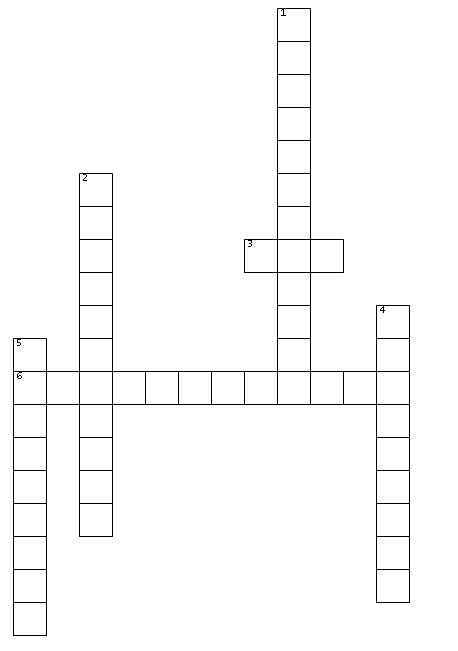
Section I: Crossword Puzzle
Test your vocabulary and understanding of cell biology terms with this crossword.
Cell Biology Crossword
ACROSS:
_____ stands for DeoxyriboNucleic Acid (3 letters)
These are important for photosynthesis in plants (11 letters)
DOWN:
They are the powerhouses of the cell (12 letters)
Paramecium is a ____________ organism (11 letters)
It is a kind of waste disposal system of the cell (9 letters)
One of the biologists who presented the cell theory (9 letters)
(a) Both A and R are true, and R correctly explains A
(c) A is true (mitochondria are powerhouse), but R is false (they produce ATP, not proteins)
(a) Both A and R are true, and R correctly explains A
(a) Both A and R are true, and R correctly explains A
(a) Both A and R are true, and R correctly explains A
(c) A is true, but R is false (meiosis reduces chromosome number to half)
(c) A is true, but R is false (some protists also have chloroplasts)
(c) A is true, but R is false (membrane is selectively permeable, not completely permeable)
(a) Both A and R are true, and R correctly explains A
(b) Both A and R are true, but R doesn't explain why ribosomes lack membranes
(a) Both A and R are true, and R correctly explains A
(c) A is true, but R is false (plant cell wall is made of cellulose, not chitin)
(a) Both A and R are true, and R correctly explains A
(a) Both A and R are true, and R correctly explains A
(c) A is true, but R is false (smooth ER lacks ribosomes)
Section G: HOTS Questions — Answer Hints
Hint: Explain osmosis and plasmolysis. Salt creates hypertonic solution → water moves out.
In plain water (hypotonic), water moves back in. See osmosis.
Hint: Onion has cell wall, chloroplasts, large vacuole. Cheek cell lacks these but has smaller
vacuoles. See Activity 2.3.
Hint: Cell loses regulation of entry/exit of materials. Essential molecules leak out, toxic
substances enter. Cell dies. Explain role of cell membrane.
Hint: Large surface area allows more water absorption by osmosis. More contact with soil water.
Efficient nutrient uptake.
Hint: Both tissues need high energy. Muscles for contraction, nerves for impulse transmission.
More mitochondria = more ATP production.
Hint: Defective mitochondria → less ATP. Muscles need ATP for contraction. Without enough ATP,
muscles weaken and fatigue easily.
Hint: As cells grow, volume increases faster than surface area. Large cells can't efficiently
exchange materials. Nutrients can't reach center quickly enough.
Hint: Distilled water is hypotonic → water enters → RBCs burst (no cell wall). Salt solution is
hypertonic → water leaves → RBCs shrink.
Hint: Larger cells have problems with material exchange (surface area:volume ratio). Multiple
small cells are more efficient. See mitosis.
Hint: Could use anaerobic respiration (fermentation). Less efficient but doesn't need mitochondria.
Examples: some bacteria.
Hint: Chemotherapy targets rapidly dividing cells. Hair follicles and digestive lining cells
divide rapidly like cancer cells. These normal cells are also affected.
Hint: Cell secretes proteins. Example: pancreatic cells secreting digestive enzymes. Many Golgi
and rough ER needed for protein synthesis and packaging.
💡 How to Use This Worksheet
First attempt: Complete all sections without looking at answers
Check answers: Go through each section and mark your mistakes
Revise weak areas: For topics you got wrong, review the
concept pages
Redo mistakes: Attempt incorrect questions again after revision
Practice regularly: Complete this worksheet 2-3 times before exams
Time yourself: Try to complete in 45-60 minutes for exam practice