Mind Map 1 – Production of Sound
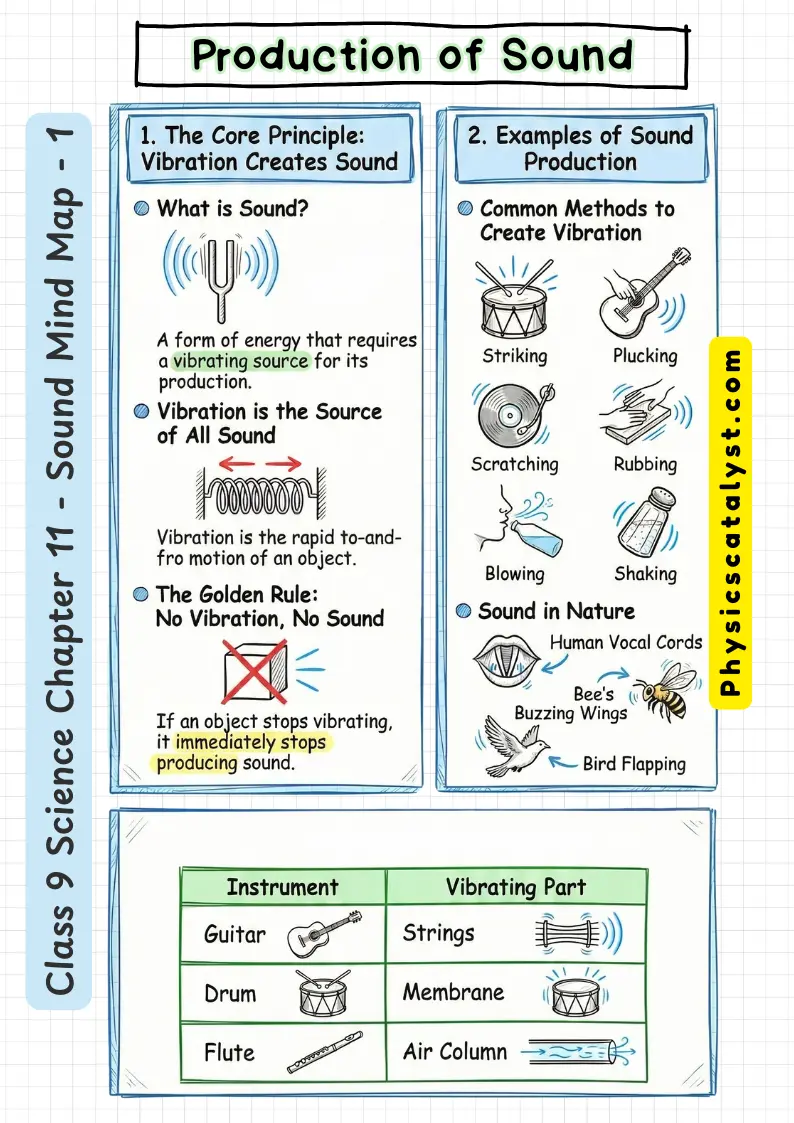
This mind map summarises how sound is produced due to vibration, including tuning fork experiments, energy transformation, and examples from daily life.

This page contains visual mind maps for Class 9 Science – Sound, based on Chapter 11 of the NCERT Class 9 Science textbook prescribed by the Central Board of Secondary Education (CBSE).
Use these mind maps for quick revision, concept linking, and last-minute exam preparation.
👉 Go back to Sound – Class 9 Science Chapter Hub | Class 9 Science
This mind map summarises how sound is produced due to vibration, including tuning fork experiments, energy transformation, and examples from daily life.

Covers the need for a material medium, wave nature of sound, and compressions and rarefactions.
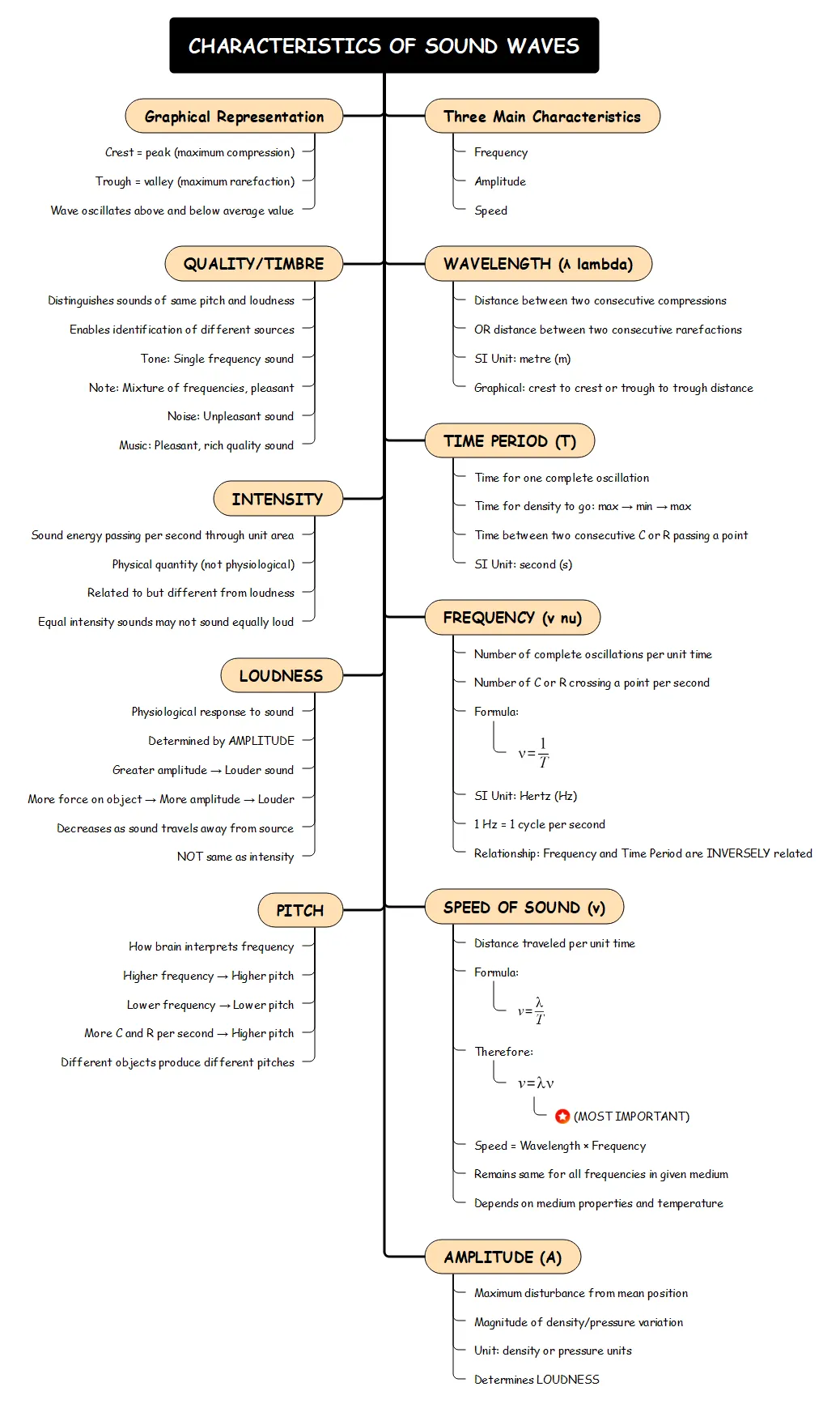
Summarises wavelength, frequency, amplitude, speed, pitch, loudness, intensity, and quality of sound.
Formula reminder: v = λν

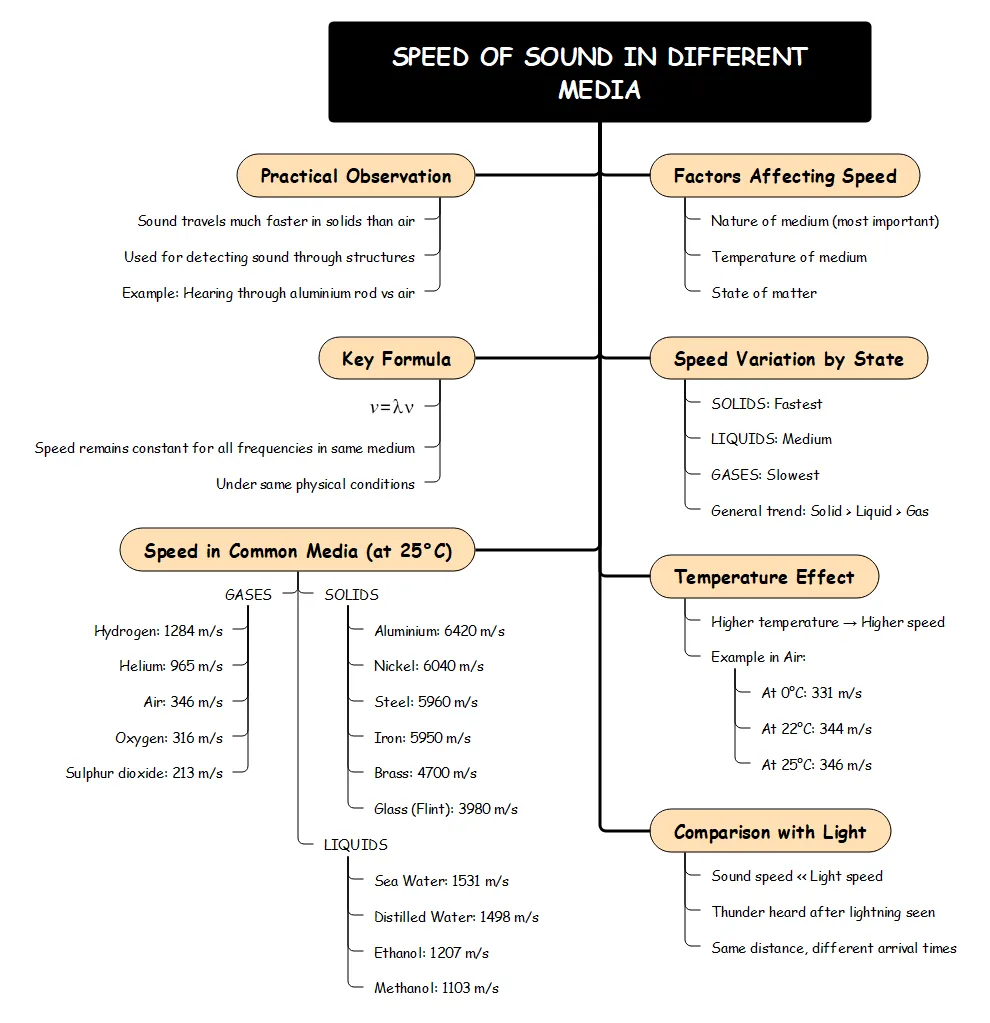
Shows variation of sound speed with medium and temperature, including comparison with speed of light.
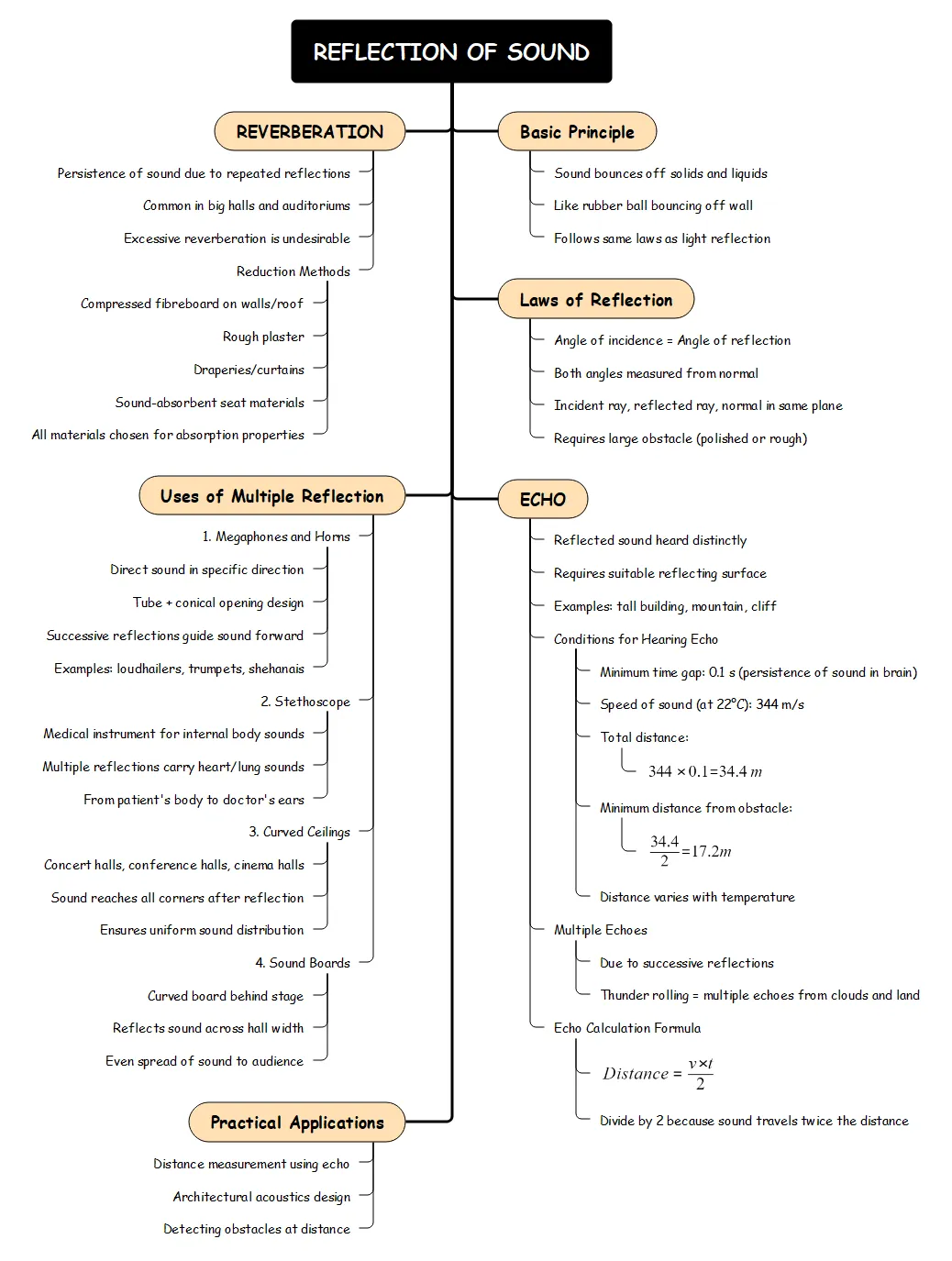
Covers echo, reverberation, laws of reflection, and applications like megaphones and stethoscopes.
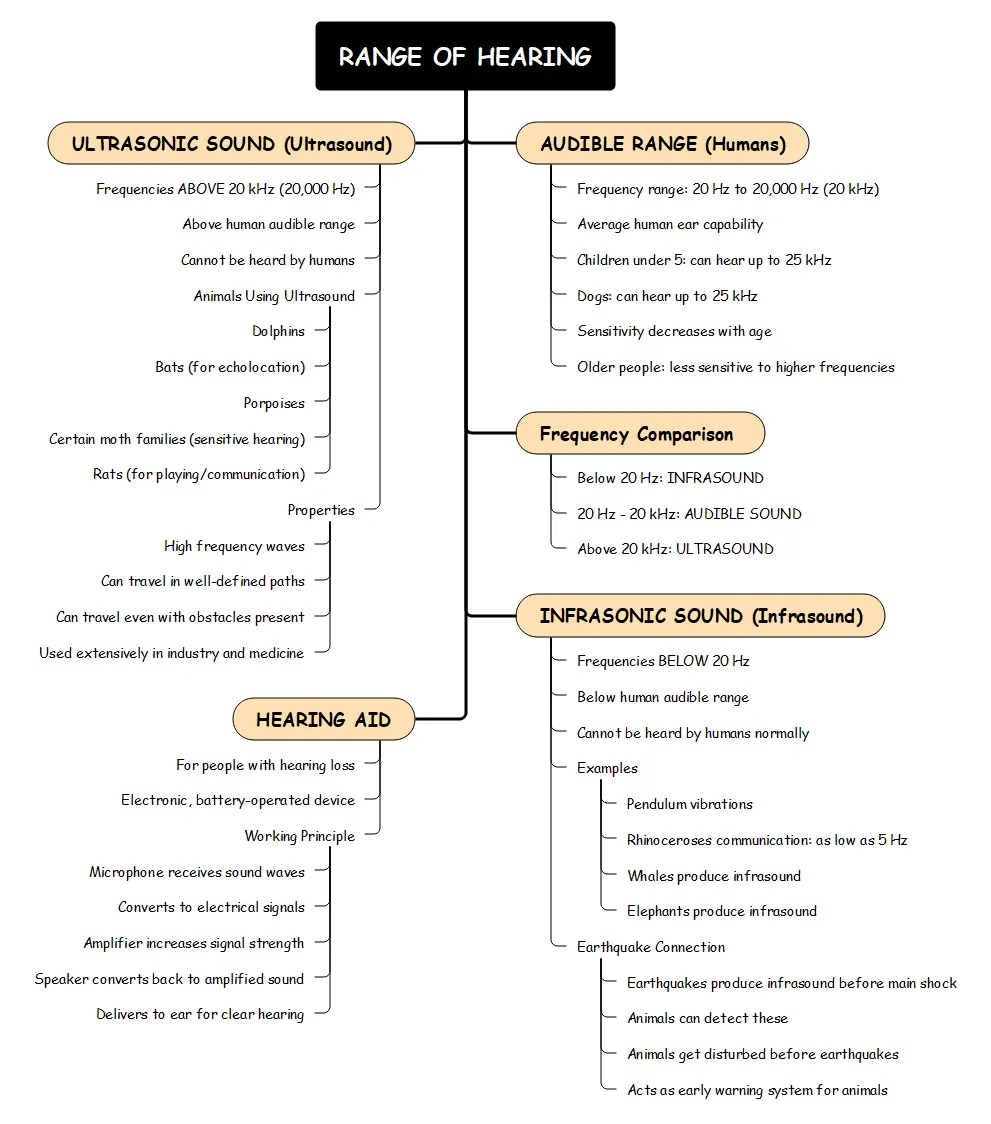
Summarises audible range of humans, infrasound, ultrasound, and animal hearing abilities.
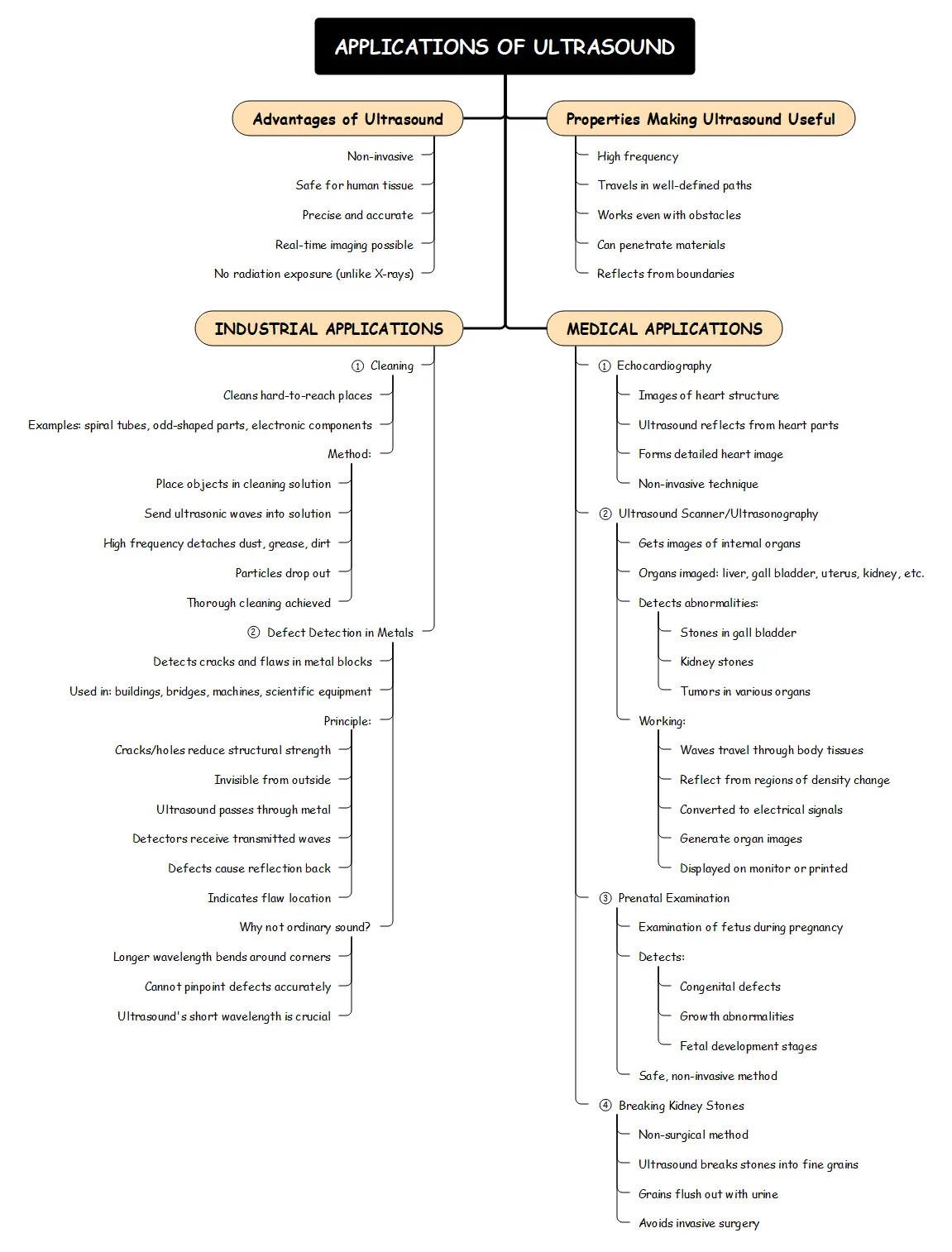
Covers medical imaging, defect detection, cleaning applications, and breaking kidney stones.
Related solutions: NCERT Solutions – Sound
Students can download all the above Class 9 Science – Sound chapter mind maps as a single PDF for offline study. These diagrams summarise important concepts such as characteristics of sound waves, speed of sound, reflection of sound, range of hearing, and applications of ultrasound.
The PDF is useful for quick revision before exams, last-minute concept recall, and visual learning. Teachers may also use these mind maps for classroom explanation and revision sessions.
PDF format • Suitable for mobile and desktop • Based on NCERT syllabus