In the Grade 6 Science textbook Curiosity, chapter ‘Living Creatures: Exploring their Characteristics’, we learnt about processes essential for survival of living beings like nutrition,
respiration, excretion, and reproduction. These are collectively called life processes. In this chapter, we will learn about life processes such as nutrition and respiration in detail
All the animals can be divided into three groups on the basis of their food habits. These are:
Herbivores: Those animals which eat only plants are called herbivores. Examples are Goat, Cow, and Deer etc.
Carnivores: Those animals which eat only other animals as food are called carnivores. Examples are Lion, Tiger, and Lizard etc.
Omnivores: Those animals which eat both, plants and animals are called omnivores. Examples are Man, Dog and Crow etc.
Process of nutrition in animals
Holozoic nutrition: It is a process by which animals take in their food. It involves different steps namely, ingestion, digestion, absorption, assimilation and egestion. Human beings exhibit holozoic mode of nutrition involving five basic steps.
Ingestion: The process of taking food into the body is called ingestion.
Digestion: the process in which the food containing large, insoluble molecules is broken down into small, water soluble molecules is called digestion.
Absorption: The process in which the digested food passes through the intestinal wall into blood stream is called absorption.
Assimilation: The process in which the absorbed food is taken in by the body cells and used for energy, growth and repair is called assimilation.
Egestion: The process in which the undigested food is removed from the body is called egestion.
Nutrition in Simple organisms
In this section we will learn about simple organisms like amoeba, paramecium, hydra, spider and frog.
Nutrition in Amoeba
Amoeba is a microscopic organism which consists of only a single cell.
Amoeba is mostly found in pond water.
Figure given below shows the structure of amoeba.
Amoeba eats tiny plants and animals as food which floats in water in which it lives.
The mode of nutrition in Amoeba is holozoic.
The process of obtaining food by Amoeba is called phagocytosis.
Steps involved in the nutrition of Amoeba:
Ingestion: Amoeba ingests food by forming temporary finger-like projections called pseudopodia around it. The food is engulfed with a little surrounding water to form a food vacuole (‘temporary stomach’) inside the Amoeba.
Digestion: In Amoeba, food is digested in the food vacuole by digestive enzymes which break down the food into small and soluble molecules by chemical reactions.
Absorption: The digested simple and soluble substances pass out of food vacuole into the surrounding environment.
Assimilation: The absorbed food materials are used to obtain energy through respiration and make the parts of Amoeba cell which leads to the growth of Amoeba.
Egestion: The remaining undigested material is moved to the surface of the cell and thrown out of the body of Amoeba.
Nutrition in Paramecium:
Paramecium is also a tiny unicellular animal which lives in water.
Ingestion: Paramecium uses its hair like structures called cilia to sweep the food particles from water and put them into mouth.
Ingestion is followed by other steps such as digestion, absorption, assimilation and egestion which are same as those we studied in Amoeba
Nutrition in Hydra
Hydra is a simple multicellular animal.
It has a number of tentacles around its mouth, which are used for ingestion of food.
These tentacles entangle small aquatic animals and kill them with their stinging cells.
After this they push them into their mouth. Now inside their body cavity digestive juices are secreted by the surrounding cells.
These juices digest the food and the digested food is absorbed through the cavity walls and assimilated in the cells.
Nutrition in frog
The frog uses its long sticky tongue to catch insects. Frogs have well developed digestion system in which the digestion of food takes place.
Nutrition in Spider
In spiders digestion of food actually takes place outside their body.
A spider weaves a sticky web in which small insects get stuck.
It then injects digestive juices into the body of the insect, which digests the body part of the insects.
The spider then sucks up the digested food.
Nutrition in Humans
There are 5 steps involved in nutrition in animals including human beings.
Ingestion: The process of taking in food by an organism is called ingestion.
Digestion: Digestion is the mechanical and chemical breakdown of food into simple soluble substances.
Absorption: The digested food is then taken up by the circulatory stream and carried to the cells of the body. This process is called absorption.
Assimilation: The absorbed food is used by the body to generate energy and for growth.
Egestion: The undigested food is a waste product, and it is removed from the body in the last stage by a process called egestion
Human Digestive system
We take food through our mouth, digest and utilise it.
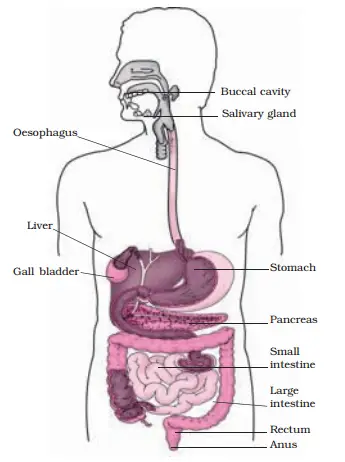
Figure given below shows the human digestive system
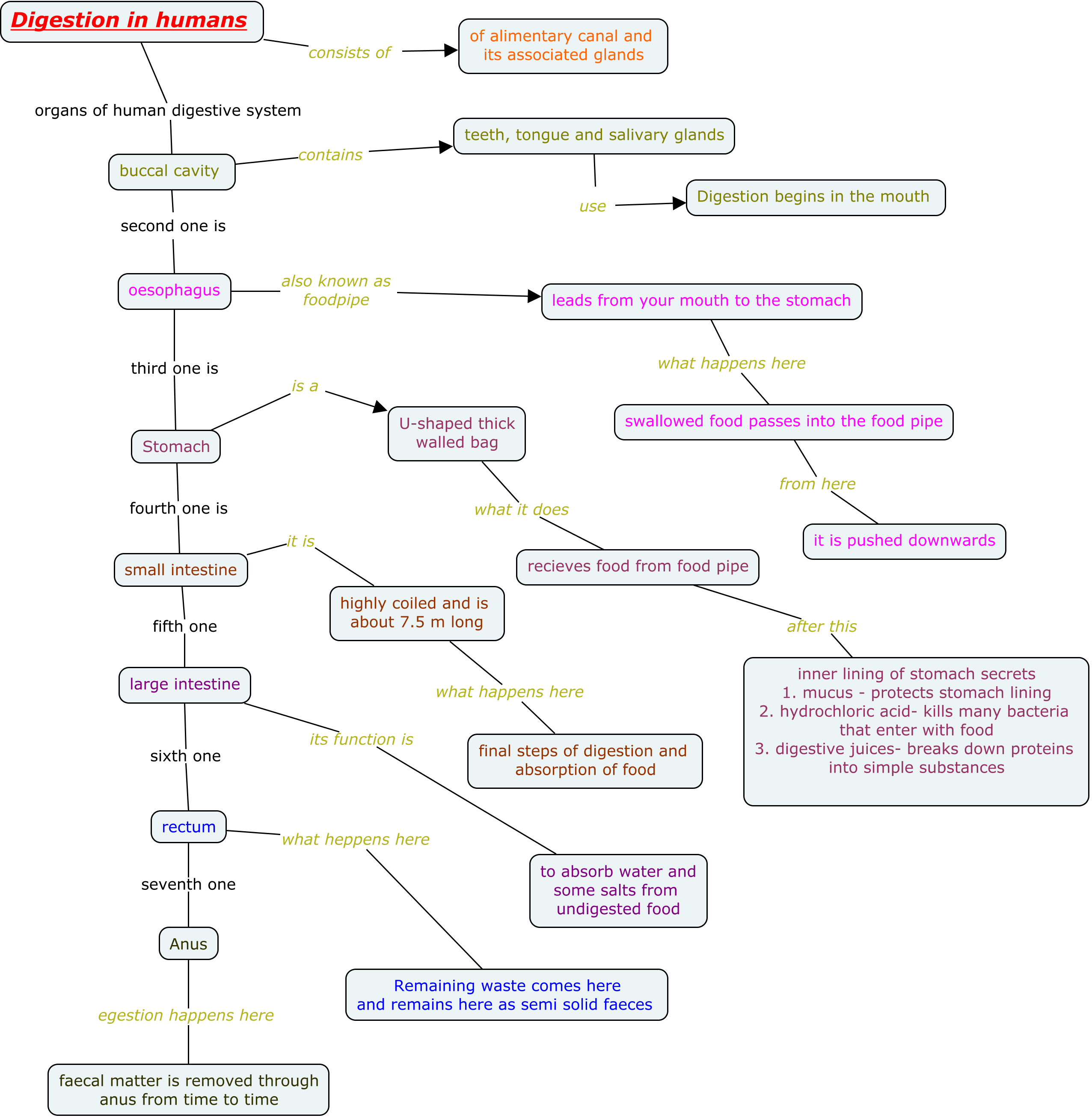
Human digestive system consists of alimentary canal and its associated human digestive system glands.
Various organs of human digestive system in sequence are
Mouth (Buccal Cavity)
Oesophagus (food Pipe)
Stomach
Small intestine
Large intestine
Rectum
Anus.
The glands which are associated with human digestive system are
Salivary glands- Located in mouth or Buccal Cavity
Liver- It is the largest gland situated in the upper part of abdomen on the right side.
Pancreas- located just below the stomach
The ducts of various glands open into the alimentary canal and pour secretion of their juices into the alimentary canal.
Digestion in the mouth
We take food through our mouth and the process of taking food into the body is called ingestion.
The mouth or buccal cavity contains teeth, tongue and salivary glands.
Digestion begins in the mouth when we chew the food with the help of our teeth.
The teeth cut the food into smaller pieces, chew and grind it.
Chewing breaks down the food into smaller pieces and mixes them with saliva. This process is called mastication.
The salivary glands secrete watery liquid called saliva. Saliva is a digestive juice that helps to partially digest the starch present in the food.
The tongue helps in mixing saliva with the food.
Tongue is a muscular organ that helps you eat the food. It mixes saliva with the food during chewing and helps in swallowing it.
We also taste food with our tongue as it has taste buds that detect different tastes of food.
Teeth
Teeth are used for cutting, grinding and tearing the food before you swallow it.
You have different types of teeth to do the job.
Milk teeth:- A child has only 20 teeth, 10 in each jaw. These are known as milk teeth. They begin to fall at the age between 6 to 8 and then new set of teeth grows.
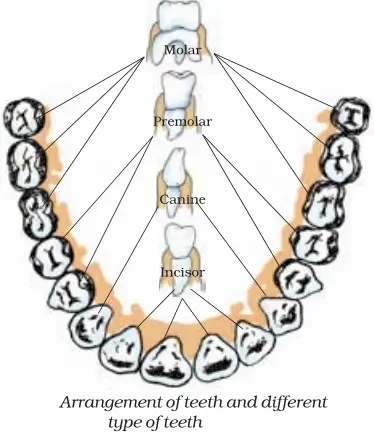
Permanent teeth:- This set contains 32 teeth, 16 in each jaw. There are 4 incisors, 2 canines, 4 premolars and 6 molars in each jaw. As shown below in the figure:
Your front teeth are incisors. They are used for biting and cutting.
Next to incisors are canines. These are pointed and are used for piercing and tearing pieces of food.
Teeth at the back of your mouth are broad with almost flat surface. These teeth crush and grind food and are called the premolars and molars. Molars are larger then premolars
White substance that covers your teeth is called enamel.
The food pipe/Oesophagus
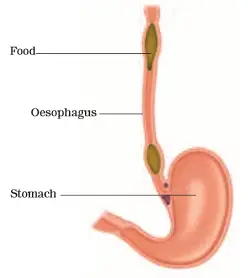
The swallowed food passes into the food pipe or oesophagus as shown below in the figure
This figure shows the movement of food in food pipe which runs along the neck and chest.
So, the oesophagus leads from your mouth to the stomach. It is made up of the muscles.
Food is pushed down by movement of the wall of food pipe.
This movement called peristalsis, takes place throughout the alimentary canal and pushes the food downwards.
Stomach
Stomach is the thick walled bag present on the left side of the abdomen. (see human digestive system figure)
It is the widest part of the alimentary canal. Oesophagus brings slightly digested food from mouth into the stomach.
The stomach walls contain s three tubular glands in it walls which secrete gastric juice.
The gastric juice contains three substances: Hydrochloric acid, the enzyme pepsin and mucus.
The hydrochloric creates an acidic medium which facilitates the action of the enzyme pepsin that is the digestion of protein into simple substances.
The acid kills many bacteria that enter along with the food.
The mucus helps to protect the stomach wall from its own secretions of hydrochloric acid.
The partially digested food then goes from the stomach into the small intestine.
Small intestine
Small intestine is highly coiled and is about 7.5 m long.
After leaving stomach food enters small intestine and last steps of digestion takes place in small intestine.
It receives secretions from liver and pancreas and wall of small intestine also secrets juices.
Liver:- Liver is the largest gland in the body and is situated in the upper part of the abdomen on the right side. It secrets bile juice that is stored in gall bladder
Pancreas:- It is the large cream coloured gland located just below the stomach. The pancreatic juice acts on carbohydrates, fats and proteins and converts them into simple form.
The partly digested food now reaches the lower part of the small
The walls of the small intestine contain glands which secretes intestinal juice.
The enzymes present in it finally convert the proteins into amino acids, complex carbohydrates into glucose and fats into fatty acids and glycerol.
Absorption:
The small intestine is the main region for the absorption of digested food.
The inner surface of the small intestine has numerous finger-like projections called villi which increase the surface area for rapid absorption of digested food.
The digested food which is absorbed through the walls of the small intestine goes into our blood.
Assimilation:
The blood carries these useful substances to each and every part of the body. The body uses these substances for its growth and maintenance. The absorption of digested food and its utilization by the body is known as assimilation.
Glucose, which is the final product of carbohydrate digestion, is broken down with the help of oxygen into carbon dioxide and water to release energy. Amino acids are used for growth and repair of worn out cells.
Fatty acid and glycerol Store below the skin as energy reserves.
Egestion:
The undigested and unabsorbed food moves into the large intestine, to a part called colon, where some amount of water and salts are absorbed from the undigested food
The remaining undigested food that moves to the second part called rectum. Here, it is stored and removed from the body through the anus.
The exit of this waste material is regulated by the anal sphincter.
This process is known as egestion.
Digestion in grass eating animals(ruminants)
Plant eating animals such as cows, deer, goats, buffaloes, camels and yaks quickly swallow their food after chewing it once.
The swallowed food goes to a chamber called rumen. They bring back the food later into the mouth and chew it again. These animals are called ruminants and the process is called rumination.
The stomach of ruminants consists of four compartments: rumen, reticulum, omasum and abomasum.
The swallowed food first enters the rumen, where the microorganism begins the digestion of the food (cellulose- a complex carbohydrate).
In the first two chambers, the rumen and the reticulum, the food is mixed with saliva and separated into layers of solid and liquid material
Solid clump together to form the cud or bolus.
The cud is brought back from the rumen to the mouth, where it is chewed slowly by completely mixing it with saliva and is further broken down. When the cud is chewed and swallowed again, it enters the omasum where the food is broken down further into simple compounds that enter in the abomasum.
Hydrochloric acid and digestive juices (gastric juices) are secreted in these chambers and the food is now fully digested.
It is then sent to the small intestine for absorption and the leftover undigested food is passed on to the large intestine from where it is excreted.
Grass is rich in cellulose and we humans cannot digest it.
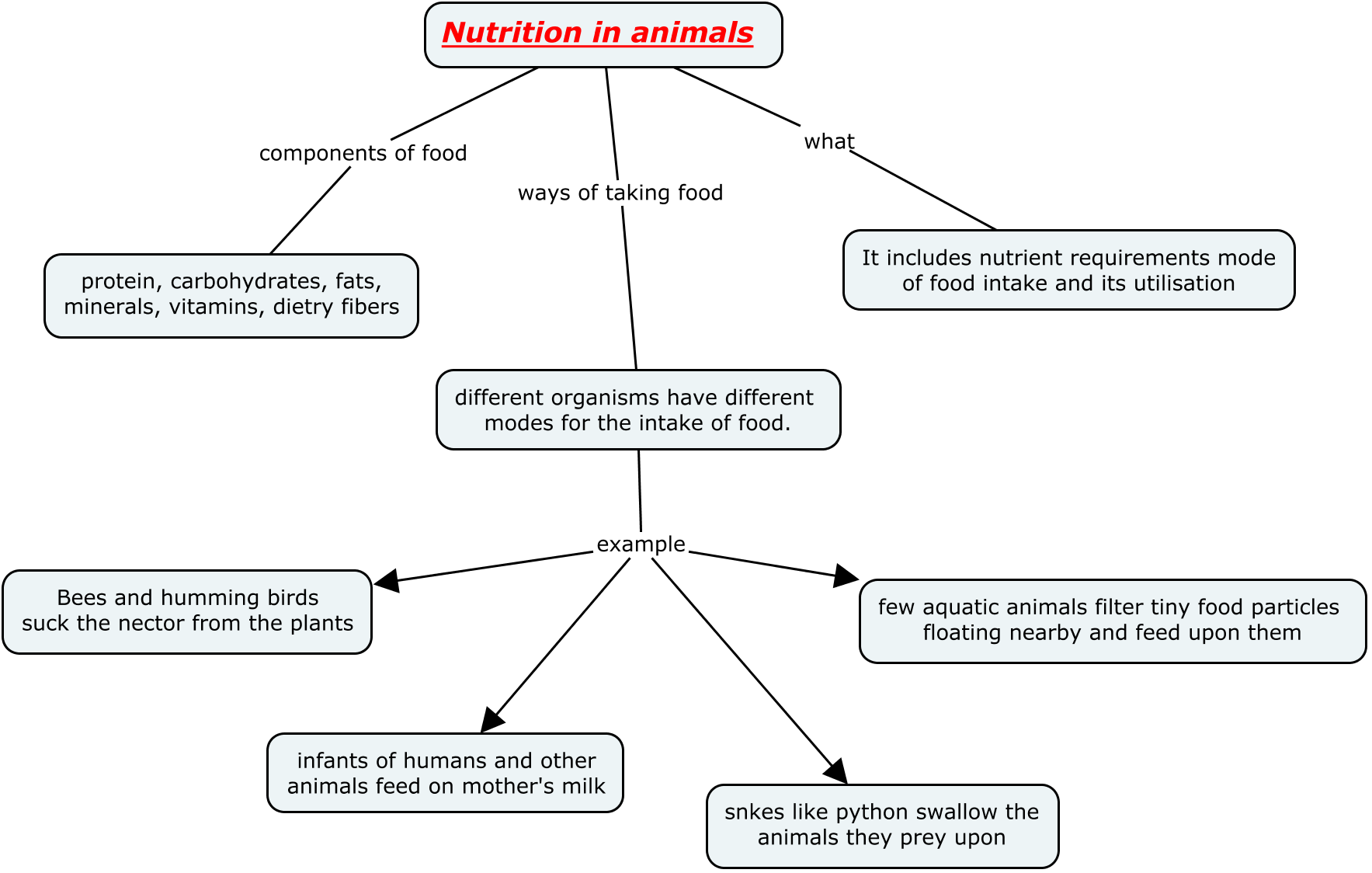
Concept Map
Nutrition in animals Digestion in humans
Respiration
All living things need energy to live.
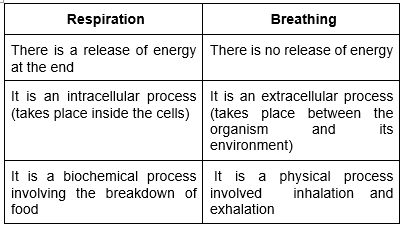
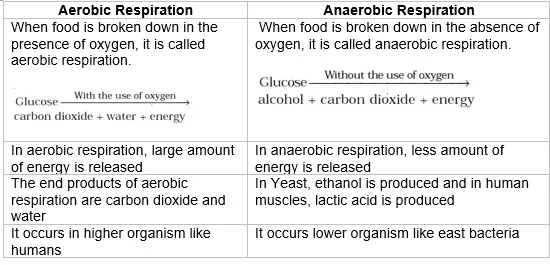
Respiration is the process of using oxygen to break down food to release energy, carbon dioxide and water.
Respiration in humans
In human beings, the process of respiration involves breathing, gaseous exchange and cellular respiration.
Respiratory system in Human beings:
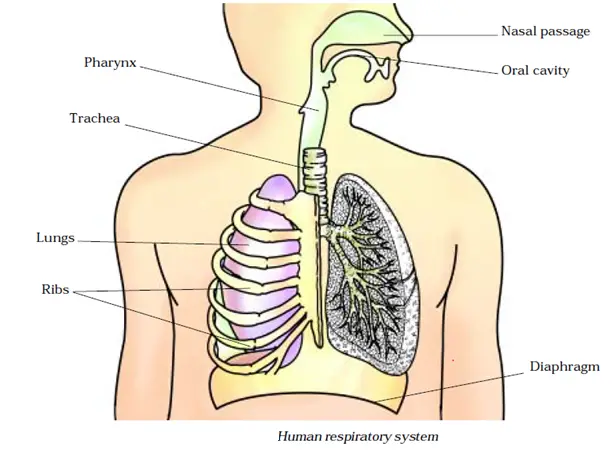
The organ for respiration in human beings are as follows:
Nasal cavity
Pharynx
Trachea (windpipe)
Lungs (bronchi, bronchioles, alveoli)
Diaphragm
Lungs are present in the chest cavity, which is surrounded by ribs on the sides. The ribs form a cage-like structure called the ribcage. A large muscular sheet called diaphragm forms the base of the ribcage. The diaphragm contract and relax all the time.
Breathing:
Breathing is a continuous process in which humans breathe in and breathe out air from the body. It is an involuntary action controlled by the brain.
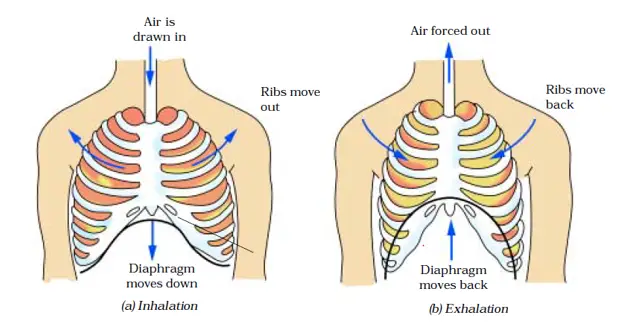
Breathing consists of two phases: inhalation, the process of taking in air and exhalation the process of giving out air.
Mechanism of Breathing:
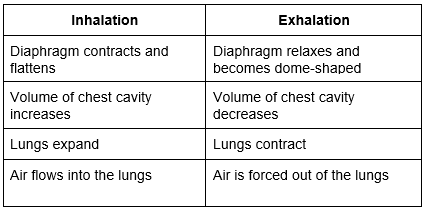
During inhalation, the diaphragm contract, it flattens and increases the space inside the chest cavity. This makes the air breathe in and so chest rises and the air outside rushes into lungs. During exhalation, the diaphragm relaxes, it decreases the space inside the chest cavity. This makes the air breathe out and so the chest moves inward and the expelled out.
The air that breathes in passes through the nostrils. The hair and mucus present in the nostril trap dust and germs present in the air. The air then enters a tube-like structure called the trachea (windpipe). The trachea divides at the lower end into narrow tubes called bronchi. The bronchi further divided into numerous extremely narrow tubes called bronchioles in each lung. These tubes open into tiny air sacs called alveoli. The walls of the alveoli are lined with a network of blood vessels and capillaries to facilitate the exchange of gases.
Gaseous exchange:
In respiration, the exchange of gases takes place between the alveoli of the lungs and the capillaries surrounding it.
When fresh air enters the alveoli, oxygen from the air passes into the blood in the capillaries and binds to the red blood cells. At the same time, carbon dioxide passes out of the blood into the alveoli. This entire process is known as gaseous exchange.
Cellular respiration:
The RBCs (in blood) contain a protein celled haemoglobin which binds with the oxygen and forms a compound called oxyhaemoglobin. Oxyhaemoglobin is carried through the blood to all the cells of the body. In the cells, oxygen is released from oxyhaemoglobin. Cells use this oxygen to breakdown glucose (sugar) to form carbon dioxide and water and energy is released. The carbon dioxide generated diffuses into the blood. The blood carries it back to the lungs where it is expelled during exhalation.
Breathing Rate
The number of times a person breathes in a minute is called the breathing rate. At rest, a person breathes almost 14 to 16 times in a minute. During vigorous exercise or while brisk walking, the breathing rate increases.
Types of Cellular Respiration:
Note: The muscle cells in our body normally carry out aerobic respiration, but when we run fast for exercise vigorously the muscle cells work faster and require more energy. Then they respire anaerobically for a short period of time. This produces lactic acid and the person develops cramps temporarily and is forced to rest for a while.
Organs for breathing in different animals:
Different animals have different organs and mechanisms for the exchange of gases. Some of these are as follows:
Respiration in Microorganisms:
In microorganisms such as Amoeba, the exchange of gases takes place through their most body surface.
Respiration in Earthworm
In animals that live in the soil, such as earthworms and leeches the exchange of gases takes place through the slimy surface of the skin.
Respiration in Insects:
Respiratory system of an insect such as grasshopper and Cockroaches is known as the tracheal system. It is made up of spiracles and trachea. An insect takes air through tiny holes called spiracles which are located on the body. Spiracles open into narrow tubes called traceae, which carry the oxygen to different parts of the body. Carbon dioxide diffuses out through the trachea and exit through the spiracles.
Respiration in Birds
Birds have lungs with air sacs.
Respiration in Aquatic organisms
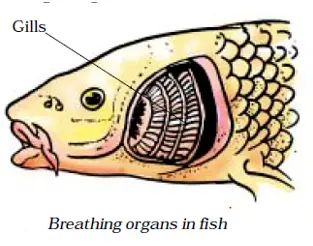
Aquatic animals like fish live in water and get oxygen which is dissolved in water. Fish have a special structure called gills on either side of their mouth. Oxygen from the water diffuses into the blood in the gills and it is carried to every part of the body. Similarly, carbon dioxide in the blood of a diffuses out into the water from the gills.
Aquatic animals such as lobster, prawns, crab and shellfish also respire through gills.
Respiration in Amphibians
Amphibians like frogs, newts and salamander are both aquatic and terrestrial. Frogs have lungs, but they use their skin for the exchange of gases when in water. They use their lungs when on land.
Respiration through the lungs is known as pulmonary respiration and respiration through the skin is known as cutaneous respiration. When at rest of floating on water, the Frog takes in air through its nostril into the buccal cavity. The gaseous exchange takes place through the lining of the buccal cavity. This method of respiration is known as buccal respiration.
Respiration in Plants:
Plants also respire by taking in oxygen and giving out carbon dioxide.
The leaves of most plants have tiny pores called stomata on the underside. Guard cells on either side of the stomata regulate their opening and closing.
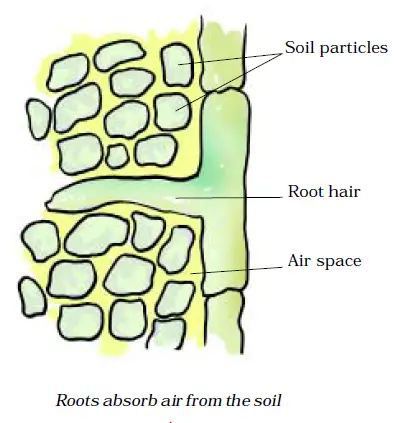
Roots of plants also need oxygen to respire. They take in air present in the soil. When land remains waterlogged, the roots are not able to obtain air. This damages the roots and so the plant dies.
The stem bark also has tiny opening called lenticels which help in gaseous exchange during night time.
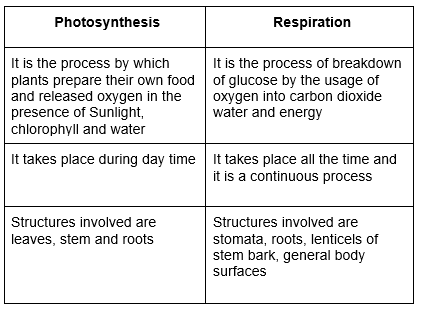
Differences between Photosynthesis and Respiration:
Resources for further reading
These are most of the resources we referred while preparing the notes for this chapter Nutrition in animals